
A consistent request contract
Define a common envelope for supported operations. Preserve provider-specific options explicitly rather than promising every model has identical capabilities.
Unified model access
A consistent interface between your application and the models it depends on. Keep provider integration and routing decisions in one deliberate layer.
The challenge
Provider APIs differ in payloads, streaming behavior, limits, and errors. When those differences spread through application code, changing a model becomes an application-wide migration.
The approach
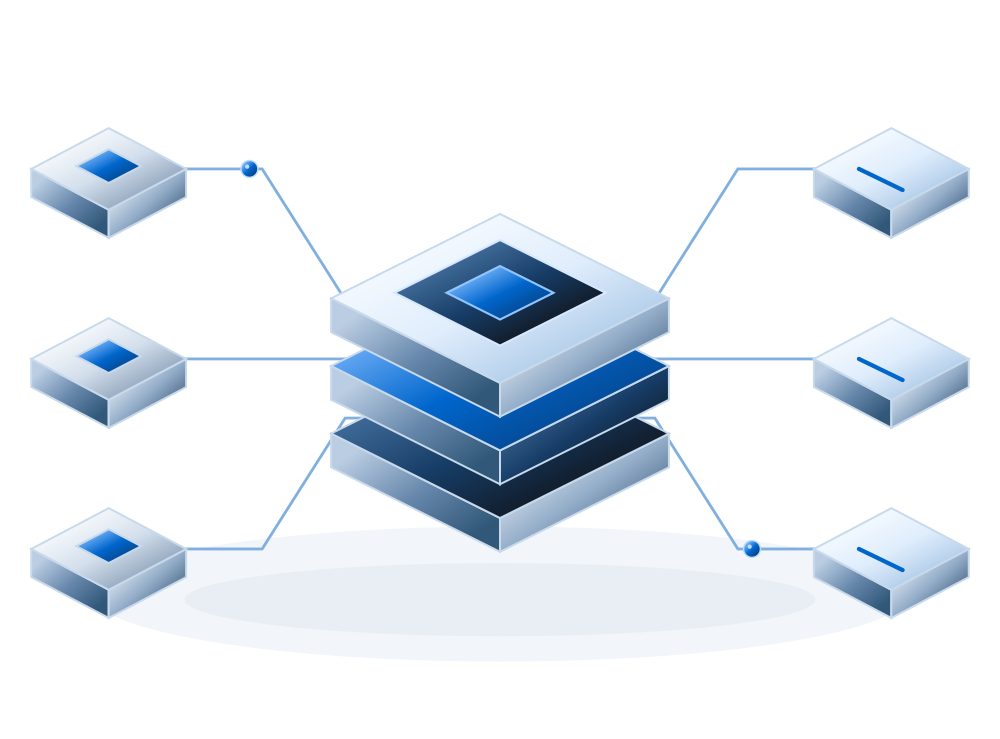
Gateway is the core ASTER engineering direction: a shared request boundary with explicit model selection and provider adapters. The aim is a stable application contract while provider-specific behavior remains inspectable.
Product direction
Proposed capabilities guide the engineering work. Their implementation is a separate validation step.
Define a common envelope for supported operations. Preserve provider-specific options explicitly rather than promising every model has identical capabilities.
Select a configured model by task and policy. Return the chosen route in request metadata so behavior can be explained.
Keep credentials, payload translation, and error normalization within adapters. Applications should receive actionable failures without exposing secrets.
Under the surface
Typed request envelope
Validate the boundary
Select configured model
Translate the contract
Execute inference
Engineering considerations
Practical contexts
Keep a chat or extraction application independent of provider-specific plumbing while retaining the controls it needs.
Use a shared request shape to compare configured models. Record model version, parameters, and prompts alongside the evaluation.
Development direction
An existing engineering project, now positioned as the core of the ASTER family. This site documents its development direction; production APIs and shipped capabilities have not been validated in this repository.
Specify supported operations, adapter interfaces, streaming semantics, and error classes.
Exercise adapters against fixtures and controlled provider requests; instrument route decisions.
Evaluate failover, latency-aware routing, cost budgets, and regional deployment after the core path is reliable.
Proposed sequence. Milestones describe validation goals, not release commitments.
Connected by design
Connect with AsteriaX
Explore ASTER Gateway or connect about an application workload, technical collaboration, or startup ecosystem opportunity.